Every craft in this hub comes down to one decision made before anything else: matching the tool to the material. A crochet hook size G-6 is 4.00 mm in the Craft Yarn Council standard system; an H-8 is 5.00 mm; an I-9 is 5.50 mm. Those three sizes cover most of the medium-weight yarn projects a person will ever make, and the gaps between them are small enough that a beginner can own all three and stop guessing. Needlework splits along the same fault line. A sewing machine needle runs from NM 60 to NM 130 in the Schmetz sizing, and the number you choose is dictated by the fabric under the presser foot, not by the machine or by habit. Get the pairing right and the craft behaves; get it wrong and you spend an evening blaming your tension, your pattern, or your machine for a problem that lives entirely in the tool.
Sizing systems, and why the number on the hook or needle is only half the information
Buy hooks by millimeter, not by letter. The letter-and-number system (G-6, H-8, I-9) is a North American convention that the Craft Yarn Council standardizes, but the letters alone tell you nothing about diameter unless you carry the conversion in your head: G-6 is 4.00 mm, H-8 is 5.00 mm, I-9 is 5.50 mm. Many hooks sold outside the US are stamped only in millimeters, and some are stamped with both. When a pattern says "H hook" and your hook says 5.00 mm, you are holding the same tool. When a pattern says "H hook" and your hook came from a set with no metric marking, you are guessing, and the guess is where gauge problems start.
The letter system also breaks down at the edges. Steel hooks, used with crochet thread rather than yarn, use a separate numbering that runs the opposite direction from intuition: a steel hook size 1 is 2.75 mm, which is finer than the smallest of the yarn hooks above despite having a lower number. A crafter who buys a "size 1" hook expecting something chunky will receive a fine steel hook meant for lace edgings and doilies. The two systems do not overlap, and no conversion chart will make them overlap, because they are built for different materials entirely.
Sewing machine needles have the same trap in a different form. The Schmetz guide gives a range of NM 60 to NM 130, with the number describing the needle's diameter in hundredths of a millimeter. A 60 is fine and a 130 is heavy, and the correct choice is set by the weight of the fabric and the thread you are using, not by the machine. Most machines will happily accept any needle in that range, which means the machine will not save you from a bad pairing. A heavy needle in fine fabric leaves visible holes along the seam line that do not close up after washing. A fine needle in heavy fabric deflects, and you get skipped stitches or a bent needle you discover only when it starts hitting the plate.
The cost of all this is small and the cost of ignoring it is not: a caliber of hook or a pack of needles is cheap, and a ruined piece of fabric or a frogged blanket is not. The trade-off is that you have to stop and check the number every time rather than reaching for whatever is nearest.
Yarn weight and hook size: what the pairing actually does to the fabric
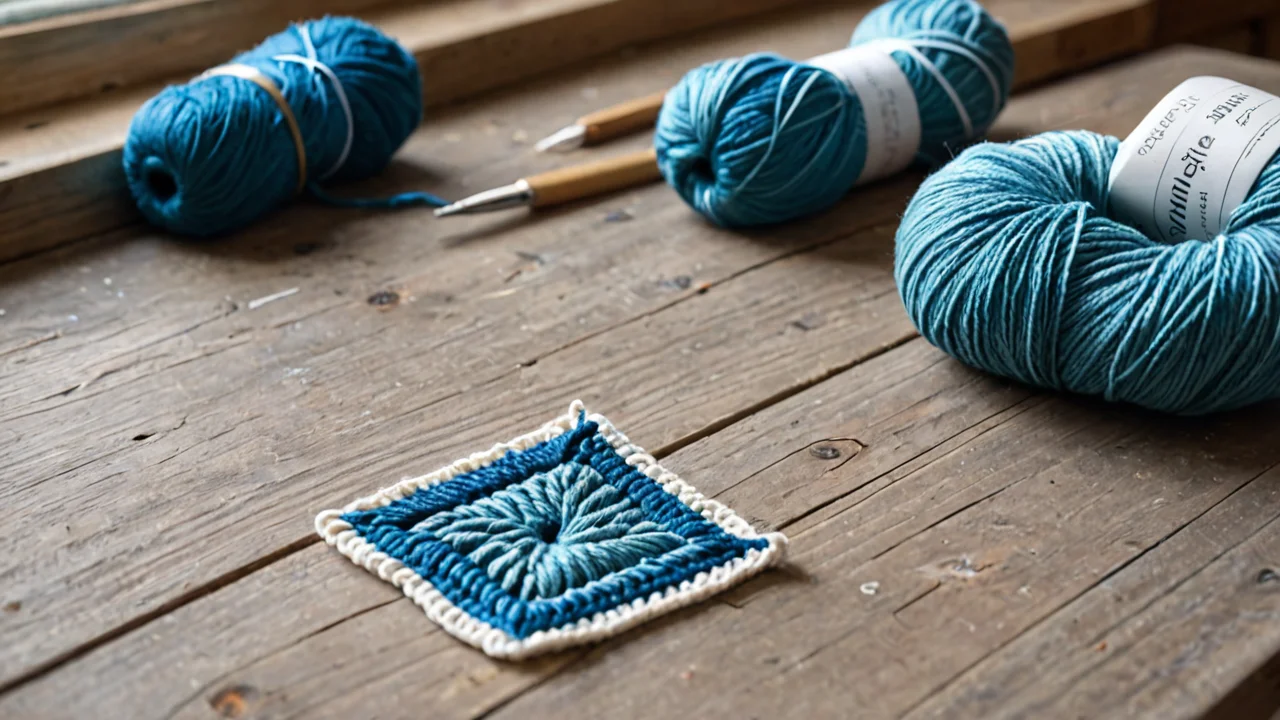
Hook size does not just determine how fast a project grows; it determines whether the fabric is worth having. A G-6 at 4.00 mm is commonly used with worsted-weight yarn for beginner-friendly projects like basic blankets and hats, and it produces a firm, dense fabric with clear stitch definition. An H-8 at 5.00 mm is the size most often recommended for learning to crochet with medium-weight yarn and for projects like granny squares and simple blankets, because the slightly larger opening makes it easier to see where the next stitch goes. An I-9 at 5.50 mm is frequently used with medium to light bulky yarns to create a looser fabric for items like baby blankets and beginner hats.
Those descriptions are not arbitrary. The same worsted-weight yarn worked on a G-6, an H-8, and an I-9 produces three different fabrics from one ball of yarn. On the G-6 the resulting fabric is stiff enough to hold a shape, which is what you want for a dense hat brim or a sturdy bag, and unpleasant for a blanket that should drape. On the I-9 the fabric opens up and drapes, which is right for a baby blanket and wrong for anything that needs to hold structure. The H-8 sits in the middle and is the reason it gets recommended so often to people learning: it is forgiving of uneven tension because the gaps between stitches are large enough that a slightly tight stitch does not lock the row.
The practical sequence is to choose the yarn first, then choose the hook by the fabric you want, then check gauge. Patterns usually specify a hook and a gauge, and the gauge is the real instruction; the hook size is the pattern writer's guess at what will get you there. If your swatch comes out too small, go up a hook size; too large, go down. The letter is a starting point, not a rule. The cost of skipping the swatch is a garment that fits wrong after hours of work, and the cost of doing it is one evening and a small amount of yarn you will unravel and reuse anyway.
Where this gets people is in substituting yarn. A pattern written for worsted on an H-8 will not behave the same in a thinner yarn on the same hook, and the fabric will be looser and the finished object smaller. The fix is not to change the hook to compensate blindly; it is to work a swatch in the new yarn and adjust until the gauge matches, which may mean a hook several sizes away from the one printed.
Thread work and fine hooks: the craft that lives below the yarn sizes
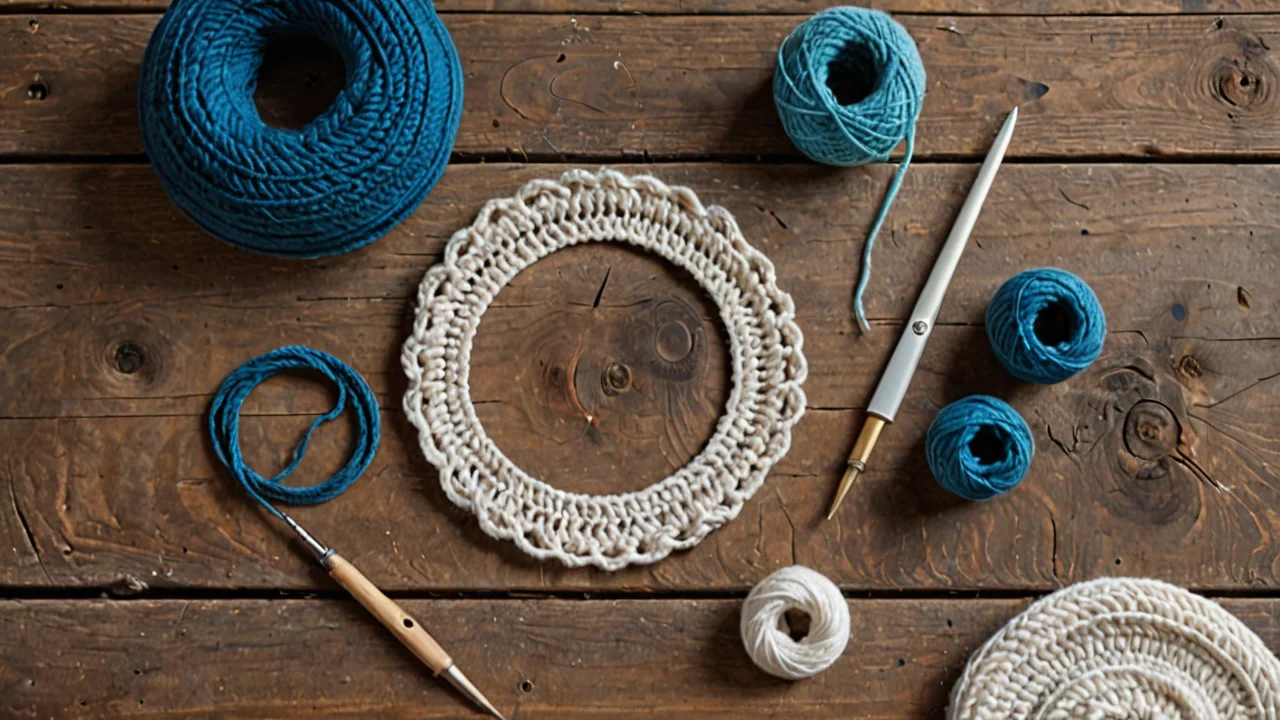
Crochet thread work uses a completely different set of hooks and a different physical approach. A steel hook size 1 at 2.75 mm is a fine hook used primarily with crochet thread for detailed work such as lace edgings and doilies. It is smaller in diameter than a G-6, and it is held and worked differently in practice: the stitches are tiny, the thread has no stretch, and the tension comes from the fingers rather than the wrist. Someone who has only worked worsted-weight yarn on an H-8 will find the transition genuinely difficult for the first hour, because the hand positions and the amount of movement are different, not just smaller.
The reason to bother is that thread work produces things yarn cannot: flat, stable lace that holds a pressed shape, edgings fine enough to attach to a handkerchief or a pillowcase without bulk, and doilies that lie flat because the thread has no loft to fight. The reason most people do not bother is speed. A doily in size 1 steel hook and thread takes many hours for a small finished piece, and the mistakes are harder to see and harder to undo because the stitches are so small. This is the craft's honest trade-off: high detail, low speed, and a much longer learning curve than the medium-hook work above.
Equipment matters more here than anywhere else in needlework. Fine steel hooks bend, and a bent hook snags thread in a way that reads as a tension problem. Buy steel hooks individually rather than in a cheap set, and replace any hook that has lost its point or its smoothness. Thread weight also matters: the same pattern worked in a heavier thread on the same 2.75 mm hook will come out larger and stiffer, and the fix is a lighter thread or a smaller hook, not a change in technique.
Sewing machine needles and the fabric they are chosen for
Choose the needle by fabric weight and type first, then the thread, then adjust stitch length. The Schmetz range of NM 60 to NM 130 covers everything from fine silks and lightweight cottons at the low end to heavy denim and canvas at the high end, and the correct needle for a given seam is the one whose size matches the fabric's weight and structure. A universal needle in the middle of the range handles most woven cottons, which is why it is the default in the machine when you buy it. It is also the wrong needle for knits, for fine fabrics, and for heavy layers, and those three failures look different.
In knits, a universal needle's sharp point can break the yarn loops and produce runs that appear after washing rather than during sewing; a ballpoint or stretch needle is the fix. In fine fabrics, a needle that is too large leaves perforations along the seam that do not close, and the seam looks strained even though the stitching is correct. In heavy fabric, a needle that is too fine bends or deflects, and the symptom is skipped stitches, a loud tick as the needle hits the plate, or a needle that snaps. None of these read as "wrong needle" to a beginner; they read as machine problems, and people spend money on servicing before they spend a few dollars on the right needle.
Needles are consumable. They dull, they develop burrs, and a burr snags thread and leaves pulls in the fabric. Changing the needle at the start of a significant project, and immediately after any needle strikes the plate or the fabric jams, is cheaper than any other maintenance you can do. The cost is trivial; the discipline is the hard part, because a dull needle still sews, just badly, and the damage accumulates slowly enough that it is easy to attribute to the fabric.
Hand sewing, finishing, and the parts of a project that decide whether it lasts
The quality of a finished piece is decided less by the construction than by the finishing, and finishing is where most people cut corners because it is invisible while you are doing it. Seam allowances pressed rather than left folded, edges finished so they do not fray, and thread ends woven in rather than knotted are the difference between a garment that survives a year of washing and one that starts coming apart at the seams. In crochet and knitting, the same principle applies at the boundary: how you join a new ball, how you weave in the tail, and how you block the finished object determine whether the piece looks handmade in the good sense or the other one.
Blocking deserves its own note because it changes the finished dimensions and the drape, and because it is the step most often skipped. Natural fibers respond to moisture and shaping in a way synthetic fibers do not, and a piece that looked uneven off the hook can square up entirely after blocking. The trade-off is time and space: blocking a large blanket means finding somewhere flat for it to dry, which is not always possible. Where it is not, seaming and edging can hide some unevenness, but not all of it.
Hand sewing sits at the join between the two crafts, and it is where the tool choice matters as much as in machine work. A needle that is too large for the fabric leaves holes; too small and it bends under the pressure of a heavy seam. Sharps, betweens, and tapestry needles are not interchangeable, and the right one for the job is set by the fabric and the stitch, not by what is in the tin. The cost of getting this wrong is small in materials and large in time, because unpicking hand stitches is slow.
Choosing a craft, and the order to learn things in
Start with the craft whose tools you can hold comfortably and whose failures are cheap to undo. Crochet on a medium hook is the most forgiving entry point in this whole field: the stitches are large, the work is easy to pull out and redo, and a G-6, H-8, or I-9 with a ball of worsted-weight yarn is enough to make a real project. Machine sewing is the next step up in cost because the machine itself is the investment and the failures involve cut fabric, which cannot be undone. Thread crochet and fine handwork come last for most people, not because they are harder to understand but because they demand fine motor control and patience that are easier to build on larger work first.
The sequence that works is: learn to read a pattern and check gauge on medium-weight yarn with a hook in the 4.00 to 5.50 mm range; learn to match needle to fabric on a machine before attempting garments; then move to fine work, whether that is thread crochet on a 2.75 mm steel hook or hand finishing on fine fabric. Each stage reuses the same underlying skill, which is matching tool to material and then verifying the result with a test rather than trusting the label. A swatch, a scrap seam, or a practice motif costs minutes and tells you more than any chart.
The honest limit of all this is that the sizing systems will not carry you the whole way. Letter hooks, metric hooks, steel hook numbering, and needle sizing in hundredths of a millimeter are four different languages, and none of them is self-explanatory. The people who get good at this are not the ones who memorized the conversions; they are the ones who keep a small gauge ruler and a note of what worked, and who treat every new yarn or fabric as a question to be answered with a test rather than assumed. That habit, more than any single tool, is what separates work that holds up from work that gets quietly retired to the back of a cupboard.