Garment construction is a set of irreversible decisions made in a fixed order, and the fabric almost never behaves the way it did in the skein or on the bolt. The single most useful thing to understand before you cut, cast on, or chain is that every garment is a negotiation between three variables — the fibre, the gauge or seam allowance, and the shape — and changing one after the fabric exists means remaking the other two. Most disappointing handmade garments fail at the material choice, not at the sewing or the stitching.
Choosing the fibre before anything else
Pick the fibre for the way the finished garment will be washed and worn, not for how it feels in the shop. A fibre that needs hand-washing in cool water and flat drying will be worn rarely if the garment is a daily layer, no matter how beautiful the drape. Wool and wool blends hold shape and resist odour but felt and shrink with heat and agitation; superwash wool survives the machine but grows in length under its own weight. Cotton is strong and machine-washable but heavy, slow to dry, and prone to stretching at shoulders and hems. Linen creases hard and softens with every wash. Acrylic is cheap, washable, and pills. Silk and alpaca drape beautifully and wear out fast under friction.
Blends exist to patch these weaknesses, and the ratio matters more than the label. A small percentage of nylon in a sock yarn buys real durability; a small percentage of elastane in a ribbing keeps a cuff from going slack. Read the full fibre content, not the front of the band.
The trade-off is honest: the fibre that behaves best in the wash is usually the one that feels least special in the hand, and the fibre that feels best is the one that demands the most care. There is no fibre that does both. Decide which you can live with before you spend on quantity.
Gauge, swatching, and why the numbers are not negotiable
Knit a swatch, wash it the way you intend to wash the garment, let it dry flat, and measure it — then compare it to the pattern's stated gauge. The swatch you measure dry and unwashed is a lie; the fibre relaxes, blooms, or shrinks in the first wash, and that first wash is what the garment will be for the rest of its life. Measure a square large enough to count whole stitches and rows comfortably, and measure in more than one place.
Gauge is a density, not a suggestion. A pattern written for a certain number of stitches per measure produces a garment of a certain size only at that density; work looser and the garment is bigger, work tighter and it is smaller, and the difference compounds across a whole body. If your swatch does not match, change the needle or hook — not the stitch count, which reshapes every curve and armhole in the pattern. Needles and hooks are sized in millimetres for exactly this reason: a G-6 hook is 4.00 mm, an H-8 is 5.00 mm, and an I-9 is 5.50 mm in the Craft Yarn Council standard system, so a half-millimetre step is a real, measurable change in fabric density even when the letter labels look close together. The same logic runs through machine sewing, where needle sizes span NM 60 to NM 130 in the Schmetz guide — the number describes the shaft, and the shaft has to suit the cloth.
For sewn garments the equivalent discipline is the seam allowance and the test seam. Sew a short seam on a scrap of the actual fabric with the actual needle and thread, press it, and look at it. Puckering, skipped stitches, or a seam that pulls apart under tension are all visible before you commit to a whole garment. The cost of a test seam is minutes; the cost of skipping it is a seam you cannot unpick without marking the cloth.
Swatching costs you time and yarn you will not wear. That is the price. The people who skip it are the people who end up with a garment that fits nobody.
Reading a pattern as a construction document
Before you begin, read the pattern all the way through and mark the places where the shape changes — armholes, necklines, waist shaping, hems. Those are the points where the fabric stops being a rectangle, and they are where most errors become expensive. A pattern is a set of instructions for building a three-dimensional object from a flat sequence, and the sequence only makes sense if you know where it is going.
Check the schematic if there is one, and measure yourself against it rather than against the size label. Size labels vary between designers and between countries, and the finished measurements — bust, length, sleeve — are the numbers that actually matter. Choose the size whose finished measurements match the body you are dressing, allowing for the ease the pattern intends. A garment meant to be worn with positive ease will look wrong if you knit it to your exact measurements.
Note the technique assumptions. A pattern may assume you can pick up stitches along an edge, short-row a shoulder, or set in a sleeve. If you cannot yet, that is the moment to learn it on a swatch rather than mid-garment. The trade-off of choosing a simpler pattern is a simpler garment; the trade-off of choosing a complex one is that the learning curve lands in the middle of the project, where a mistake is hardest to fix.
Shaping, fit, and where garments go wrong
Fit problems cluster at four places: the shoulder, the armhole, the bust, and the hem. The shoulder should sit where your shoulder actually ends; a seam that drops past it drags the whole garment down and makes the sleeve hang wrong. The armhole depth has to match your body, not the pattern's average. The bust needs enough room that the fabric does not pull across it, which in knitting means short rows or dart equivalents, and in sewing means a bust adjustment to the pattern piece. The hem should hang level, which means the fabric's own weight has to be accounted for — a heavy fibre will drop after hanging, so a garment measured and finished flat can grow longer than intended.
Shaping is where the fibre and the gauge meet the body. A stiff fibre holds a structured shape and resists drape; a fluid fibre drapes and refuses structure. If the design depends on crisp edges, choose the fibre that holds them. If it depends on flow, choose the fibre that moves. Trying to get both from one material is the most common reason a finished garment looks homemade rather than made.
Ease is the other half of fit, and it is a choice, not a measurement. Negative ease makes a garment cling; positive ease makes it hang away from the body. Neither is correct in the abstract — the design decides. What goes wrong is choosing a size by the body measurement alone and ignoring the ease the pattern was drafted with.
Seams, edges, and the finishing that decides whether it lasts
Finishing is not decoration; it is what keeps the garment from failing at the edges. The seam type has to suit the fabric: a stretch fabric needs a seam that stretches with it, or the seam will pop the first time the garment is pulled on. A firm woven fabric needs a seam that will not bulk at the curve. Press every seam as you sew it, not at the end — pressing sets the stitches and shows you the seam's true behaviour while you can still change it.
Edges take the most wear: cuffs, hems, necklines, and buttonholes. A ribbed cuff that is too loose goes slack; a hem that is too tight pulls. Bind or face an edge with something that matches the fabric's stretch and weight. On a knitted garment, the cast-on and bind-off edges are the ones that must stretch enough to get the garment on and still recover. On a sewn garment, the hem finish should be invisible from the outside and should not print through to the right side.
Buttons, zippers, and closures are structural. A buttonhole that is too small for its button, or a zipper that is too short for the opening, cannot be fixed after the fact without visible repair. Test the closure on a scrap before you commit the garment.
The trade-off here is time: hand-finishing an edge takes longer than a machine stitch and shows less. It also lasts longer and looks better from the inside, which is where the wearer spends the most time looking.
Tools, sizes, and matching the instrument to the job
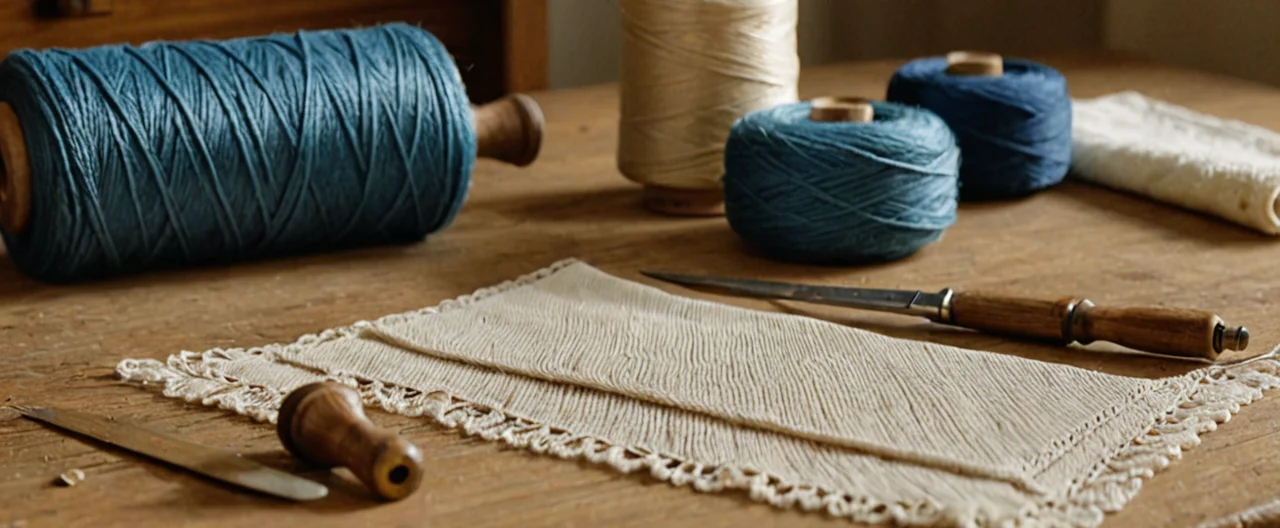
Match the tool to the fabric's thickness and the stitch's required density, and use the millimetre size as the real specification. In crochet, the Craft Yarn Council standard system assigns each letter a diameter: a G-6 hook is 4.00 mm and is a medium hook commonly worked with worsted-weight yarn for beginner-friendly projects such as basic blankets and hats; an H-8 is 5.00 mm and is widely used for learning with medium-weight yarn and for granny squares and simple blankets; an I-9 is 5.50 mm and is used with medium to light bulky yarns to make a looser fabric for items such as baby blankets and beginner hats. For fine work with crochet thread — lace edgings and doilies — the steel hook scale is separate, and steel hook size 1 is 2.75 mm. The letter and the steel number are not interchangeable; they belong to different systems and different materials.
In machine sewing, the needle's size and point shape have to suit the cloth. The Schmetz guide covers needles from NM 60 to NM 130, and within that range the choice is about the fabric's weight and weave: a fine needle for fine cloth, a heavier one for denim or canvas, and the right point for knits versus wovens. A needle that is too fine breaks or skips; one that is too heavy leaves visible holes. Change the needle for each new project — a dull needle causes more problems than a wrong stitch setting.
Beyond the instrument, the kit that earns its place is small: a tape measure, a ruler, stitch markers, a row counter, sharp scissors reserved for fabric only, and a pressing surface. The things that do not earn their place are the specialty gadgets that solve one problem you have not yet had.
The honest trade-off is cost against precision. Buying the exact millimetre size your gauge demands costs more than owning three lettered hooks and hoping; buying a needle assortment covering the NM 60 to NM 130 range costs more than one pack of universals. The people who sew and knit a lot end up owning the range anyway, because the range is what the work requires.
Care, repair, and the life of the garment
Wash the way the fibre demands, and wash less often than you think. Wool and silk need cool water and gentle handling; cotton and linen tolerate more heat but shrink and crease; acrylic survives the machine but pills with agitation. Dry flat unless the fibre and the construction can take a hanger — a wet knitted garment on a hanger will stretch at the shoulders and never recover. Store folded, not hung, for anything with weight or stretch.
Repair early. A small hole in a knitted garment can be darned invisibly while it is still small; left alone it becomes a ladder. A seam that is starting to pull can be re-sewn before it fails. The first sign of wear is usually at the highest-friction point — under the arm, at the cuff, at the seat — and that is where to look when you inspect a garment.
The trade-off of careful care is convenience, and it is a real cost: a garment that needs hand-washing and flat drying is a garment you will reach for less. That is worth knowing before you choose the fibre, not after. The garments that last are the ones whose care the owner will actually do.